AI & Engineering
AI Chatbot Development
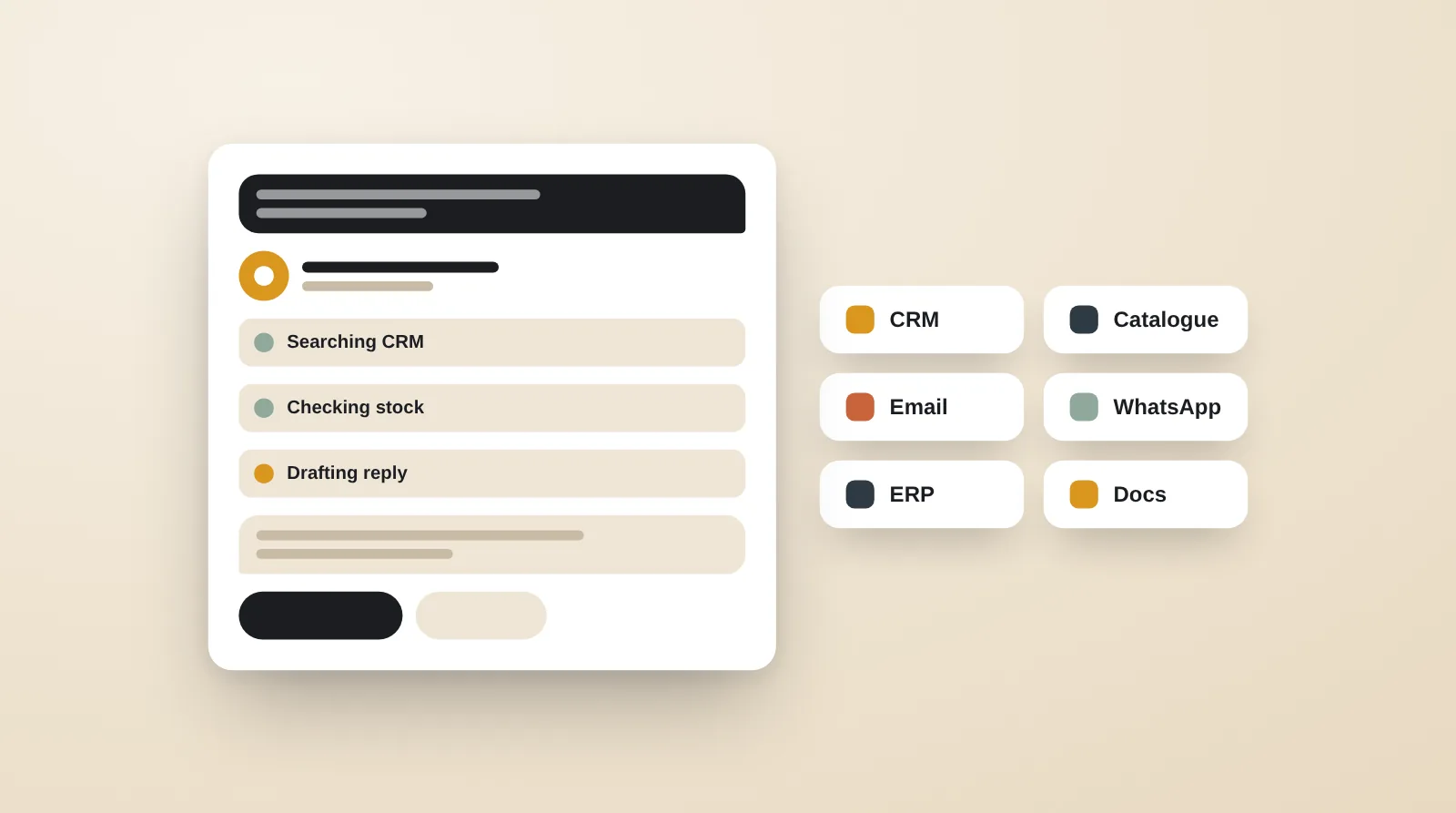
gaa-tha builds AI chatbots for websites and the WhatsApp Business API, trained on your catalogue, FAQs and policies. They recommend products, track orders, capture and qualify leads, reply in English, Hindi, Gujarati or Hinglish, and hand the conversation to your team when a person is needed — with Shopify integration and analytics on what customers actually ask.
Last updated 22 October 2026
 Service hero · 16:9
- Best for
- D2C and Shopify brands, retailers, real-estate, education and service businesses answering the same questions on WhatsApp and the website every day
- Timeline
- Website bot in 2–4 weeks; WhatsApp bot in 3–6 weeks including Meta business verification and template approval
- Engagement model
- Fixed setup fee, then an optional monthly plan for content updates, tuning and analytics
- Channels / platforms
- Website chat widget, WhatsApp Business API and Instagram DMs; Shopify, CRM and helpdesk integrations
The service
What is AI Chatbot Development?
An AI chatbot is a conversational assistant on your website or WhatsApp that answers customer questions in natural language using a large language model grounded in your own content — catalogue, FAQs, shipping and return policies — and that can look up live data such as order status or stock. A well-built one answers only from approved sources, admits when it does not know and passes the customer to a person instead of guessing.
At gaa-tha a chatbot project starts from your real customer conversations: we read past WhatsApp chats, emails and tickets to find the questions that repeat, then build the knowledge base, the flows for orders and leads, and the handoff rules. The bot is tested in English and the Indian languages your customers write in, connected to Shopify or your CRM, and reviewed every week in its first month using the conversation analytics.
Scope
What's included
- Conversation audit — the top questions, intents and drop-off points from your existing chats and tickets
- Knowledge base built from your catalogue, FAQs, size guides and shipping, return and warranty policies, with retrieval (RAG)
- Website chat widget styled to your brand, on Shopify, WordPress or a custom-coded site
- WhatsApp Business API setup through Meta's Cloud API or a Business Solution Provider, with message templates and opt-in flows
- Product recommendation and guided selling from live catalogue data
- Order tracking, COD confirmation and return-request flows connected to Shopify and your shipping partner
- Lead capture and qualification pushed to your CRM, a sheet or your sales team on WhatsApp
- Replies in English, Hindi, Gujarati and Hinglish, in a tone set to your brand
- Human handoff to a shared inbox with full conversation context, plus business-hours rules
- Analytics on conversation volume, resolution rate, handoffs, unanswered questions and leads captured
Process
How we work
Five steps, in the order they happen.
Read the conversations
We study your past chats, tickets and FAQs to list the questions that repeat and the ones that must always go to a person.
Build the knowledge and flows
Approved content is structured into a knowledge base, and flows are designed for recommendations, order tracking, lead capture and handoff.
Connect channels and systems
The bot is connected to your website, WhatsApp Business API number, Shopify, CRM and helpdesk, and message templates are submitted for Meta's approval.
Test in every language
Your team tests the bot with real questions in English, Hindi, Gujarati and Hinglish, including awkward and off-topic ones, and answers are corrected before launch.
Launch and tune
The bot goes live, unanswered questions and handoffs are reviewed weekly, and the knowledge base is updated as products, prices and policies change.
Outputs
Deliverables you receive
- Conversation audit and intent map
- Live chatbot on your website and WhatsApp number
- Knowledge base and approved WhatsApp message templates
- Shopify, CRM and helpdesk integrations
- Handoff inbox and escalation rules
- Analytics dashboard, admin training and all credentials
Stack
Tools & platforms
Pricing model. Fixed setup fee based on channels, languages and integrations; WhatsApp messaging charges, provider fees and AI usage are billed to your own accounts, and monthly tuning is optional.
Good to know
Questions about AI chatbots
Answer-first, so humans and AI assistants get the point quickly.
A rule-based chatbot follows pre-written menus and keywords, while an AI chatbot understands free-text questions and answers them in natural language from your own content. Rule-based bots break when a customer phrases something unexpectedly; AI bots handle variety but need grounding and testing so they stay accurate. We usually combine both — buttons for structured tasks such as order tracking, and AI for open questions.
Yes, through the official WhatsApp Business API with a verified business; the free WhatsApp Business app only offers simple greeting, away and quick-reply messages, not a real bot. Meta charges for business-initiated template messages by category, while replies to customers who message you first are generally free within the customer-service window — check Meta's current rates for India. Meta's policies also require the bot to serve your own customers, for support, orders or leads, rather than act as a general-purpose AI assistant.
Yes. Current models from Anthropic, OpenAI and Google handle Hindi, Gujarati and mixed Hinglish well, and the bot replies in the language the customer writes in. We test with the phrasing your customers actually use, including Hindi typed in Roman script, and keep product names and prices exactly as they appear in your catalogue.
It is built not to: answers come only from your approved knowledge base and live data, and the bot is instructed to say it does not know and hand over rather than guess. We test it with off-topic and trick questions before launch and review unanswered questions weekly. Prices, stock and order status are read live from Shopify or your system, never from the model's memory.
Yes. The bot can read your Shopify catalogue for recommendations, look up order and fulfilment status for tracking questions, confirm COD orders and send cart reminders on WhatsApp to customers who have opted in. It can also pass on shipping updates from partners such as Shiprocket or Delhivery where their APIs allow.
Setup cost depends on the channels (website, WhatsApp or both), the number of languages, the size of the catalogue and knowledge base, and integrations with Shopify, a CRM or a helpdesk. Running costs are WhatsApp message charges, any provider platform fee and AI model usage per conversation, all billed to your own accounts. We estimate the monthly running cost from your current chat volume before you commit.
Yes, and they should for complaints, custom orders and high-value leads. Handoff rules send the chat to your team's shared inbox with the full conversation and customer details, the bot pauses while a person replies, and outside business hours it collects details and sets a callback.
Yes, when it is set up properly: conversations are stored in your accounts, access is role-based, and AI providers are used under API terms that do not train on your data by default. We collect only what each flow needs, show opt-in and privacy notices on WhatsApp and the website, and set retention rules so old chats are not kept indefinitely.
Keep exploring
Related services
 Service card · 4:3
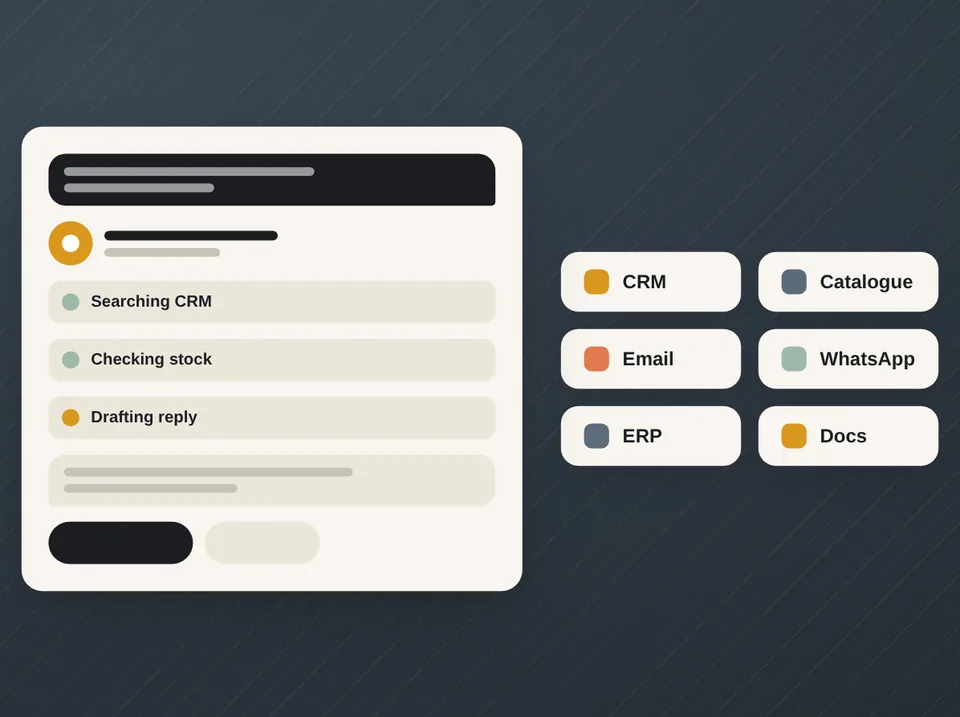
AI Agent Development
Custom AI agents that take a goal, use your tools and finish the task — inside guardrails, approvals and logs.
Explore →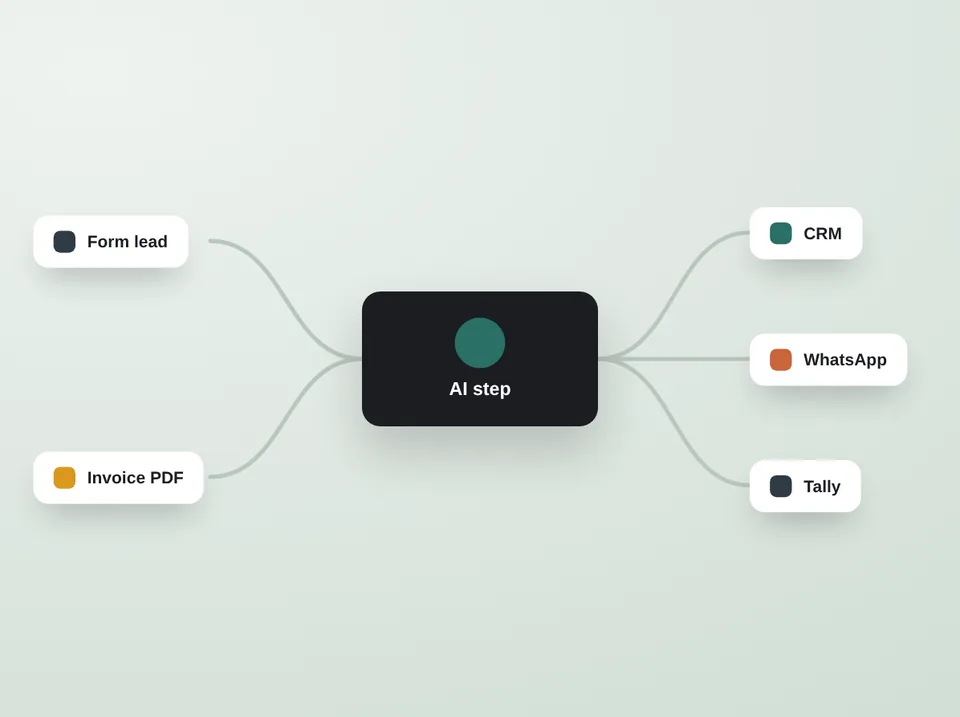 Service card · 4:3
AI Workflow Automation
Automations across your apps, with AI steps that read, sort and write — so data moves without copy-paste.
Explore →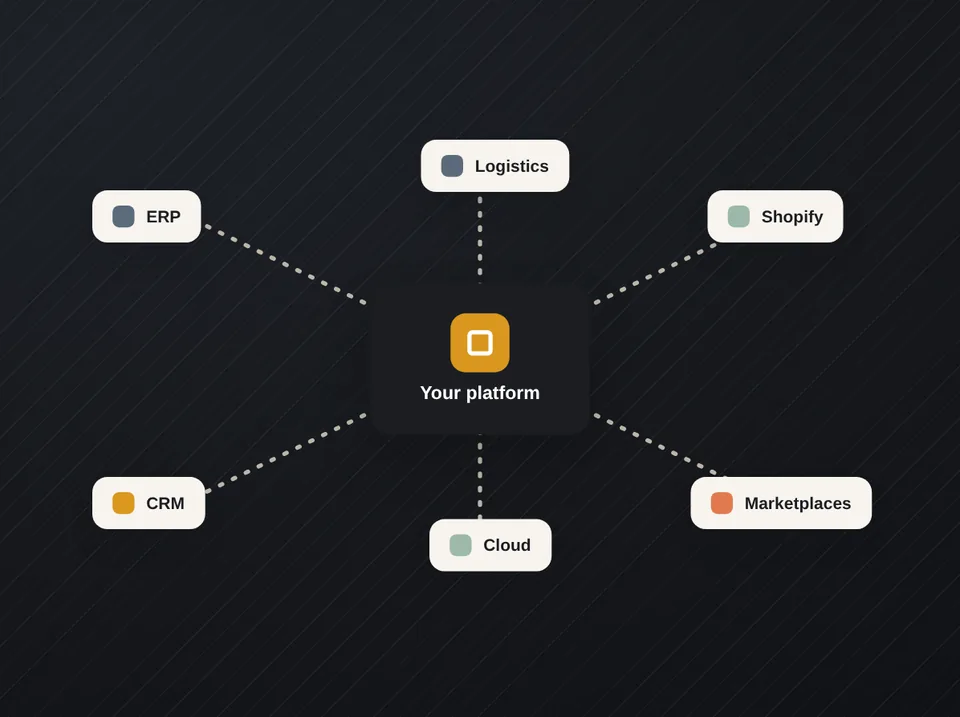 Service card · 4:3
Custom Software Development & System Integration
Bespoke software, portals and integrations engineered so your systems talk to each other — and keep running.
Explore → Service card · 4:3
Shopify Store Design & Development
Shopify stores designed for conversion and built for speed — custom themes, custom sections and the checkout integrations Indian D2C brands need.
Explore →Related reading