AI & Engineering
ERP Development & Implementation
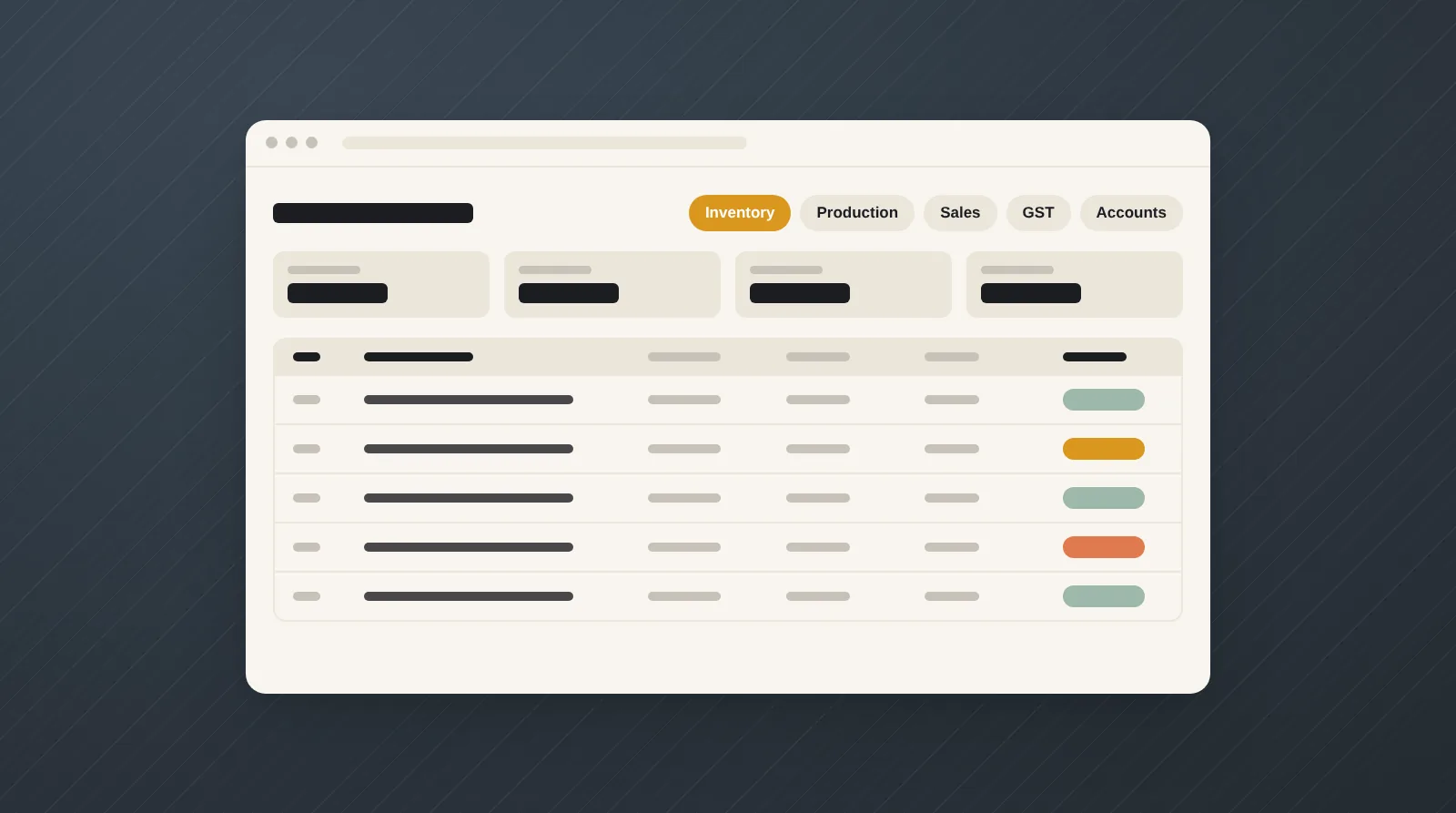
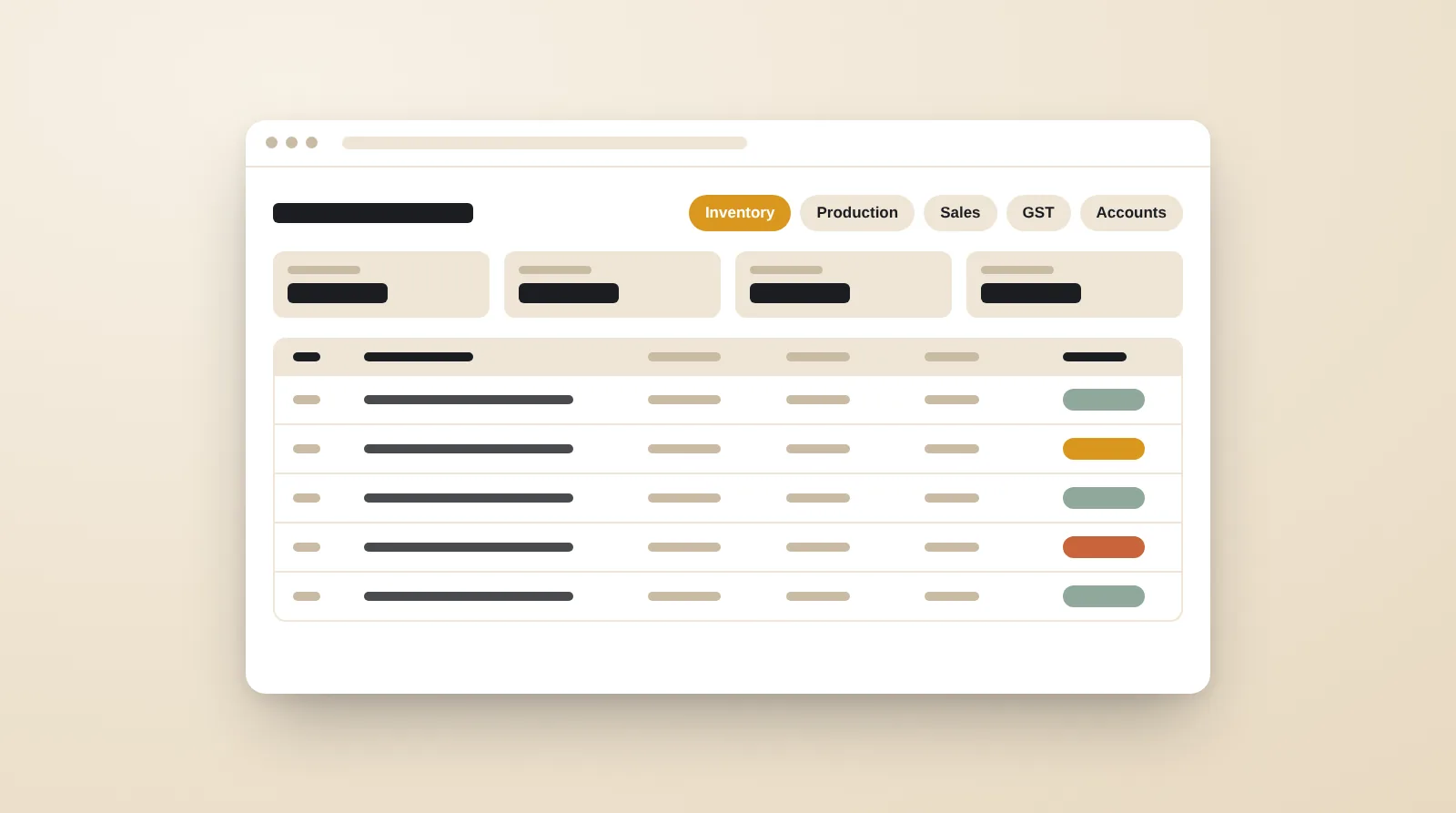
gaa-tha develops custom ERPs and implements and customises Odoo and ERPNext for manufacturers, distributors, FMCG, retail and service businesses. We map your processes first, then set up inventory, purchase, production and BOM, sales, dispatch, GST invoicing, accounts or Tally integration, HR and payroll, dashboards and mobile access — with data migration and training included.
Last updated 22 October 2026
 Service hero · 16:9
- Best for
- Manufacturers, distributors, FMCG and food brands, multi-outlet retailers and service businesses outgrowing Tally, spreadsheets and disconnected apps
- Timeline
- Odoo or ERPNext in 6–16 weeks by scope; custom ERP in phases, with the first module live in 8–12 weeks
- Engagement model
- Phased project fee per module, then a monthly or annual support plan
- Channels / platforms
- Odoo (Community or Enterprise), ERPNext on Frappe, custom builds; Tally, Shopify, marketplace, bank and logistics integrations
The service
What is ERP Development & Implementation?
ERP development and implementation is the work of putting one system at the centre of a business — purchase, inventory, production, sales, dispatch, invoicing, accounts and people — so every department works from the same data instead of separate spreadsheets. Implementation configures an existing ERP such as Odoo or ERPNext to your process; development builds custom modules, or a whole ERP, where your process does not fit a standard product.
At gaa-tha an ERP project is system engineering before it is software: we map how orders, materials and money actually move, design the target process and data model, decide what stays in Tally or other tools and how it integrates, and only then configure or code. Rollout is phased module by module, with data migration, parallel runs and role-wise training, so the business keeps running while the system changes.
Scope
What's included
- Process mapping and gap analysis across purchase, stores, production, sales, dispatch, accounts and HR
- Platform recommendation — Odoo, ERPNext, a custom build or a hybrid — with a licence and running-cost comparison
- Inventory and warehousing: multi-location stock, batches and expiry, serial numbers, barcodes and reorder levels
- Purchase, vendor management and goods receipt, with approval workflows
- Production: bills of materials (BOM), work orders, job work, material consumption and costing
- Sales, distributor and dealer orders, price lists and schemes, dispatch, delivery challans and e-way bills
- GST invoicing, e-invoicing and return-ready reports, with accounts in the ERP or integrated with Tally
- HR, attendance and payroll, plus role-based dashboards for owners, managers and the shop floor
- Mobile access for sales teams, warehouses and approvals, and integrations with Shopify, marketplaces, banks and logistics
- Data migration from Tally, Excel or an old ERP, user training, documentation and post-go-live support
Process
How we work
Five steps, in the order they happen.
Map the business
We sit with each department to document how orders, materials and money move today, where data is re-entered and which reports owners actually use.
Design the system
We design the target process, data model, roles, integrations and reports, and recommend Odoo, ERPNext or a custom build with a phased plan.
Configure and build
Modules are configured and custom features developed in sprints, with a working demo on your own data at the end of each one.
Migrate and run in parallel
Masters, opening stock and balances are cleaned and migrated, and the new system runs alongside the old one until the numbers reconcile.
Go live and support
Users are trained by role, the old process is switched off module by module, and a support plan covers fixes, changes, upgrades and new modules.
Outputs
Deliverables you receive
- Process maps, gap analysis and a solution design document
- Configured or custom ERP on your cloud account or servers
- Custom modules, reports and print formats for invoices, challans and labels
- Integrations with Tally, Shopify, marketplaces, banks or logistics partners
- Migrated and reconciled master data and opening balances
- Role-wise training, user manuals, admin documentation and credentials
Stack
Tools & platforms
Pricing model. Phased project fee per module based on the process map; ERP licences where applicable, hosting and third-party connectors are paid by you directly, and support runs on a monthly or annual plan.
Good to know
Questions about ERP
Answer-first, so humans and AI assistants get the point quickly.
Tally is accounting and inventory software that most Indian accountants know, Odoo and ERPNext are full ERPs that cover operations end to end, and a custom ERP fits when your process is genuinely unusual or is your competitive edge. Many small and mid-sized businesses do best with Odoo or ERPNext for operations, using either its built-in accounting or a Tally integration so the accountant keeps working in Tally. We recommend after mapping your process, not before.
Both are open-source ERPs with strong inventory, manufacturing and accounting modules and Indian GST support. Odoo has a large app ecosystem and a polished interface, and comes in a free Community edition and a paid per-user Enterprise edition, with some features — including full accounting — reserved for Enterprise. ERPNext, built on the Frappe framework, is fully open source with no per-user licence and uses the India Compliance app for GST, which suits businesses with many users who are comfortable self-hosting or paying for managed hosting.
An Odoo or ERPNext implementation typically takes six to sixteen weeks, depending on the number of modules, locations and customisations and the state of your data. A custom ERP is built in phases, with the first module live in eight to twelve weeks. The biggest variables are data clean-up and how quickly process decisions are made, not the software itself.
Cost is driven by the number of modules and users, how much is custom development versus standard configuration, the integrations, the data-migration effort and the platform's licence model. Odoo Enterprise carries per-user subscription fees, ERPNext has no licence but needs hosting and support, and a custom ERP has no licence but a larger build. We quote module by module after process mapping so spending can be phased.
Yes. A common set-up runs purchase, inventory, production, sales and dispatch in the ERP and keeps the books in TallyPrime, with invoices, receipts and ledgers synced automatically. Your accountant keeps the tool they know, and owners get operational data in one place. If you later move accounts fully into the ERP, that can be a separate phase.
Yes. Odoo and ERPNext both support Indian GST, and e-invoices and e-way bills can be generated from the ERP through the government systems, either directly or through a GST Suvidha Provider integration depending on the platform. We configure HSN codes, tax rules, place of supply and print formats, and test them with your accountant before go-live.
You do. Custom modules sit in a repository in your name, the ERP runs on your cloud account or servers, and all admin credentials are handed over. With Odoo Community or ERPNext there is no lock-in to us or to a vendor, and any Odoo Enterprise subscription is held in your name.
Expect the first two to three months to bring small fixes, report changes and user questions, which is why post-go-live support is part of every project. After that, a support plan covers bug fixes, version upgrades, new reports and modules, and training for new staff, with agreed response times.
Keep exploring
Related services
 Service card · 4:3
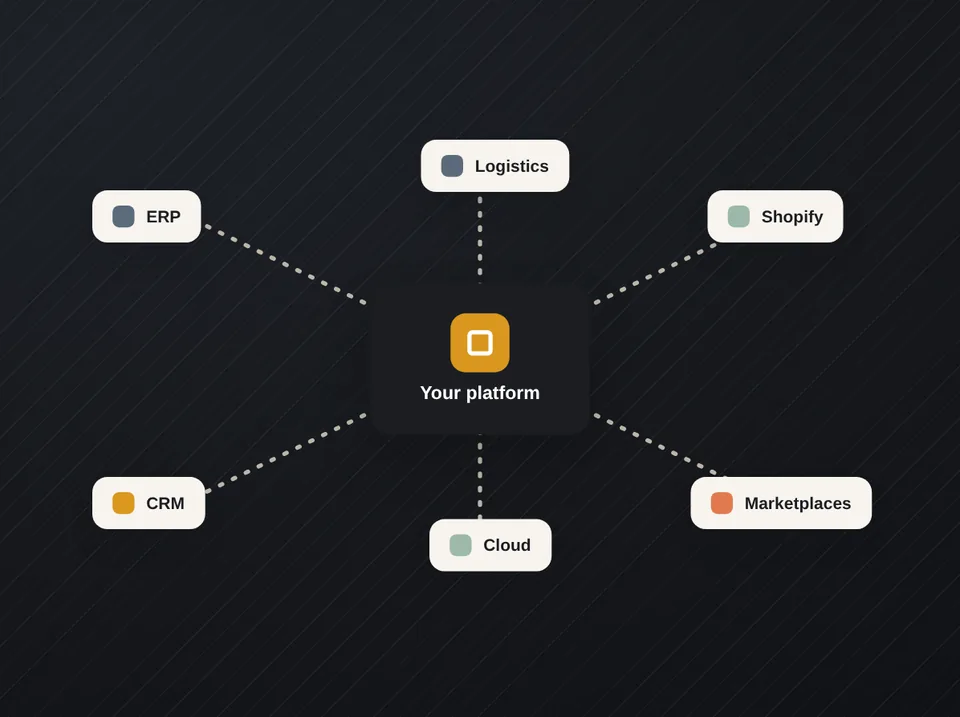
Custom Software Development & System Integration
Bespoke software, portals and integrations engineered so your systems talk to each other — and keep running.
Explore → Service card · 4:3
Custom Tools & Automations
Small, purpose-built software that removes manual work — lead trackers, lookups, dashboards and document automation.
Explore →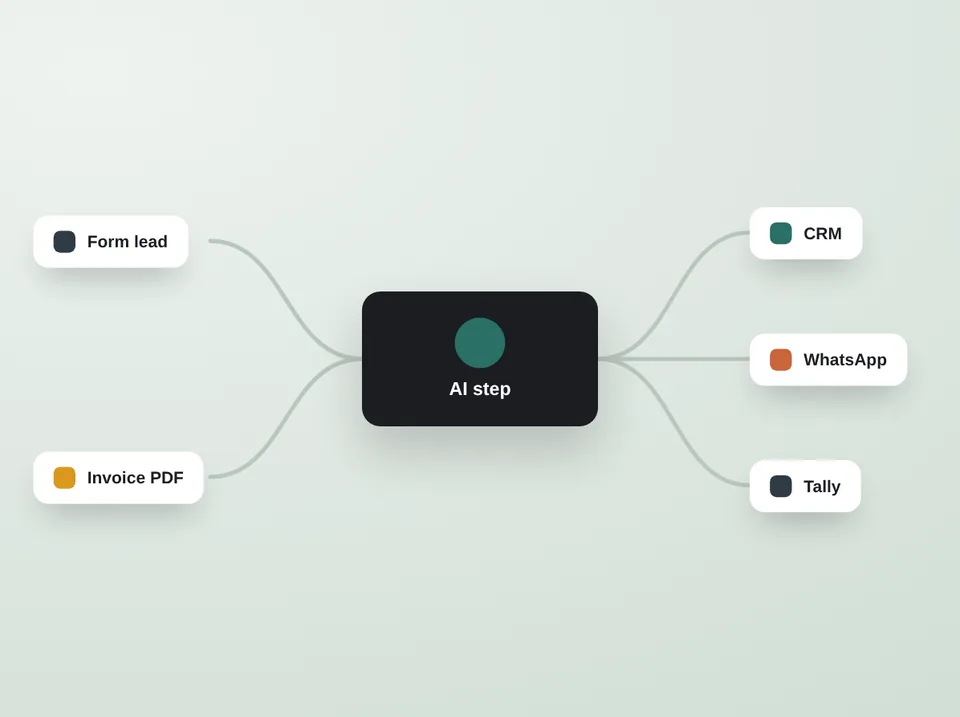 Service card · 4:3
AI Workflow Automation
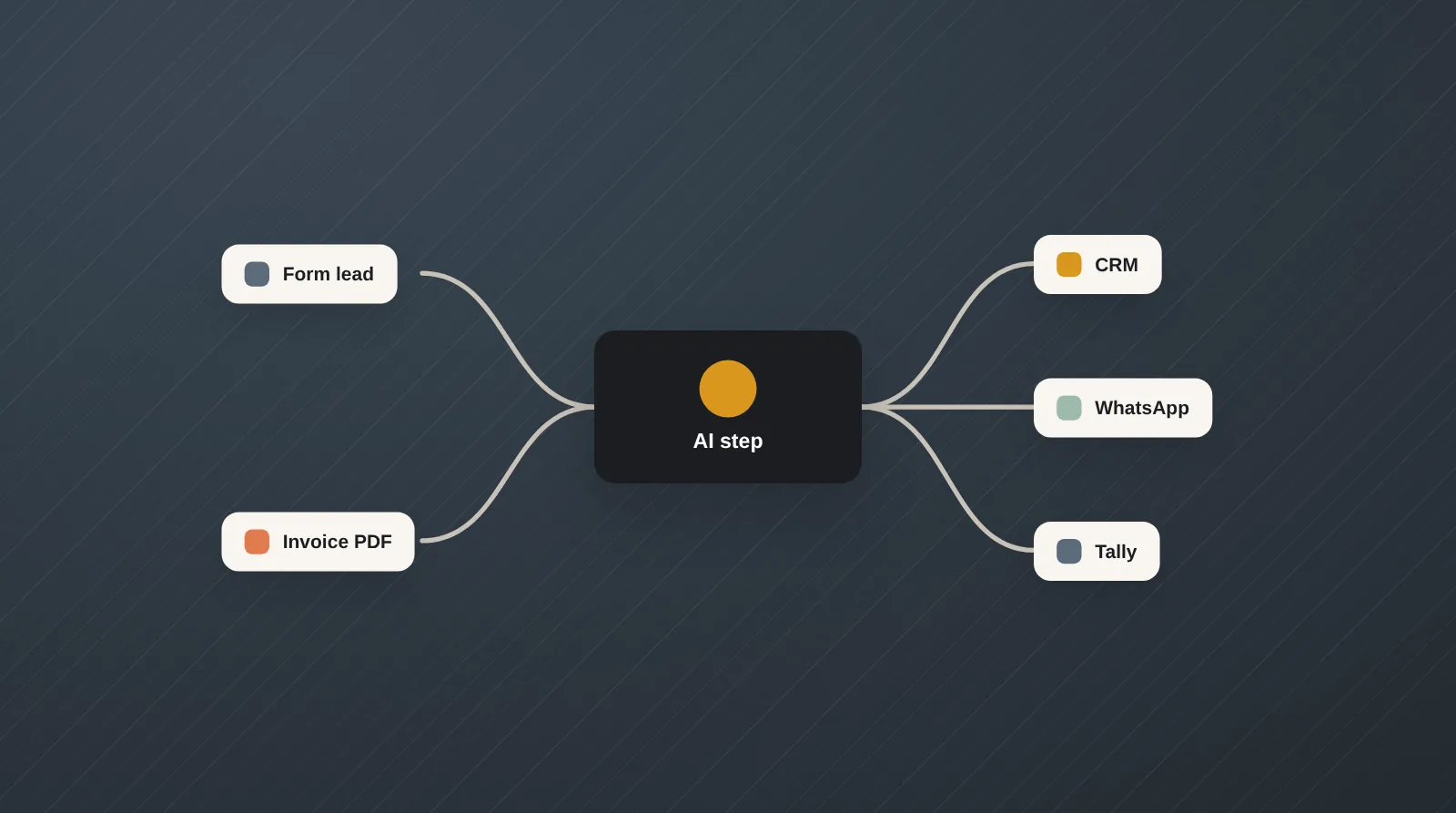
Automations across your apps, with AI steps that read, sort and write — so data moves without copy-paste.
Explore → Service card · 4:3
Web & Mobile App Design
UI/UX for apps, admin consoles and dashboards — clickable prototypes, then developer-ready systems.
Explore →Related reading